

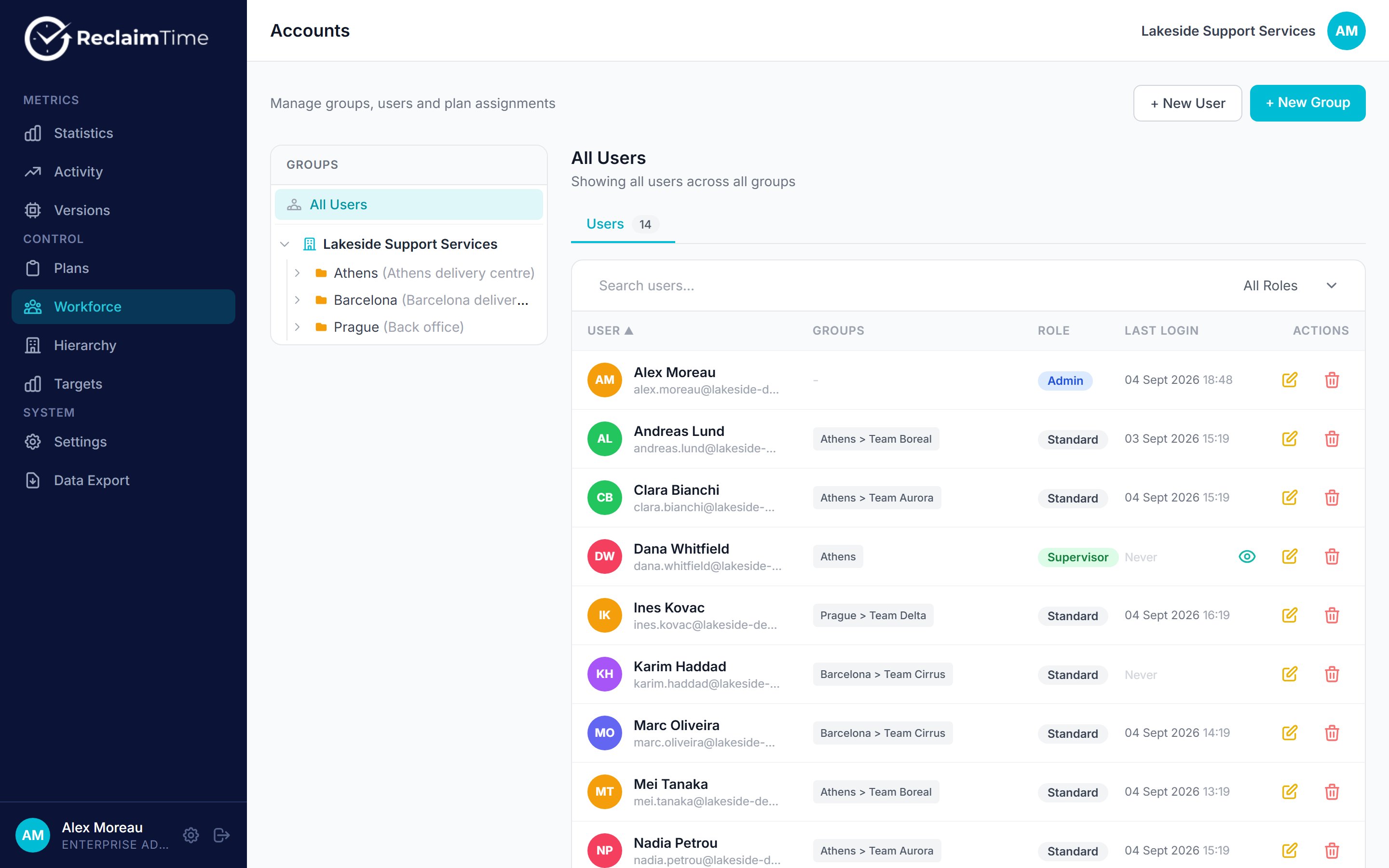
The Workforce page, showing the group tree and all accounts
Creating a user
+ New User opens the form. Set Role first, because it decides which of the remaining fields apply.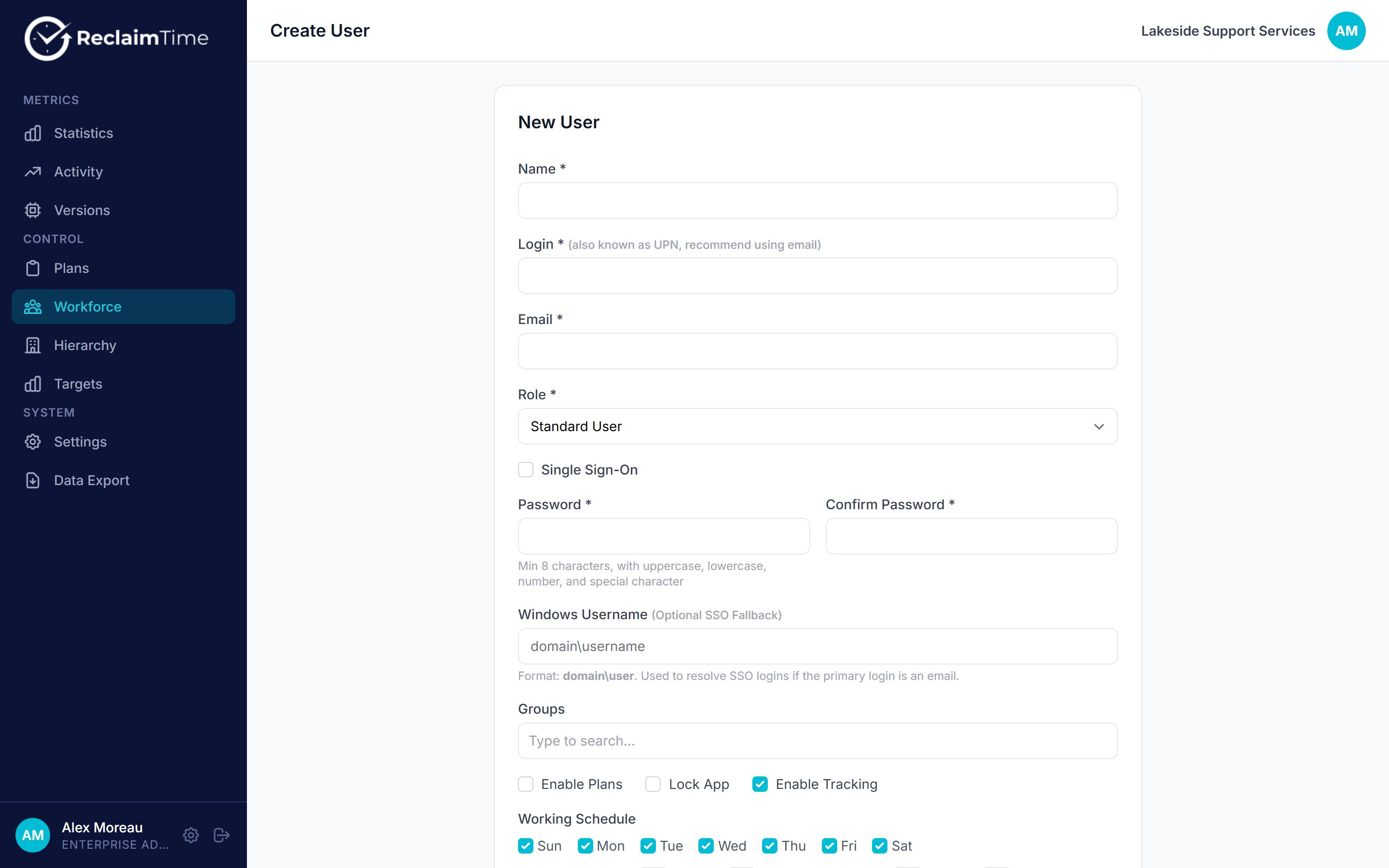
The New User form with Standard User selected
After creating the account, nothing else is needed. The client on the person’s machine retries every five minutes and signs itself in. See First login and SSO.
Fields that only apply to standard users
Single sign-on, Windows username, Enable Plans, Lock App, Enable Tracking and the Working Schedule describe how the desktop client should behave. A supervisor or admin account is a dashboard login, so those fields are hidden when you pick those roles. Do not go looking for them. Supervisors and admins get one field standard users do not: Require password change on first login, which forces a change at their next sign-in.Working schedule
Activity is only recorded inside the working schedule. Outside it the client records nothing at all, which is deliberate: it keeps evenings and weekends out of the data entirely rather than collecting them and filtering later. The organisation default is set in Settings. Override it on a person only when their hours genuinely differ, for example a different shift, and remember that a wrong schedule looks exactly like a broken client: no data, no error.Turning tracking off
Enable Tracking off means the client keeps running but uploads nothing. This is the supported way to stop tracking somebody, for instance a senior manager, without uninstalling. See Uninstall for why it is usually the better choice.Last Login
The column means different things by role, which surprises people:
So a blank Last Login on a standard user means their client has never signed in, and on a supervisor it means they have never opened the dashboard. Both are worth knowing, but they are not the same fact.
Deleting a user
Delete removes the account. It does not remove the activity already recorded against them, and it does not uninstall anything from their machine. For somebody who has left, delete the account and make sure the client is removed or the machine is reissued, otherwise it keeps trying to sign in every five minutes.Related tasks
Checked against ReclaimTime client 8.0.0.9 and dashboard V3 on 5 September 2026.